 Vietnamese Culture and Tradition
 The Dan Nhi is popular among several ethnic groups in Vietnam. It is also referred to as Dan Co in southern provinces of Viet Nam.
Read More »Dan Nhi Two-string Fiddle
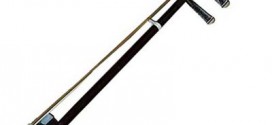
The Dan Nhi is popular among several ethnic groups in Vietnam. It is also referred to as Dan Co in southern provinces of Viet Nam.
Read More »
The Southerners of Vietnam refer to this instrument as Dan Kim. Dan Nguyet has two strings and the resonator resembles the moon, that is probably why it is named Dan Nguyet, which means moon lute.
Read More »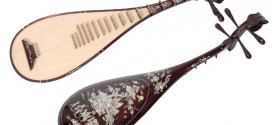
The Dan Ty Ba is a four-string instrument which is frequently present in a traditional orchestra.
Read More »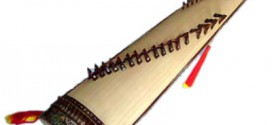
The Dan Tranh is also known as Dan Thap Luc or sixteen-stringed zither. Its shape resembles a bamboo tube that has been sliced vertically in half.
Read More »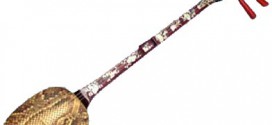
This three-stringed lute is used by several ethnic groups in Vietnam. The Viet call it Dan Tam, whereas the Ha Nhi call it Ta in. This instrument exists in three sizes: large, medium, and small. The small is the most popular.
Read More »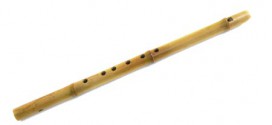
The bamboo flute has long been attached to the cultural and spiritual life of the Vietnamese. It can be said that the bamboo flute contains the musical essence of the Vietnamese countryside together with the four tranquil seasons.
Read More »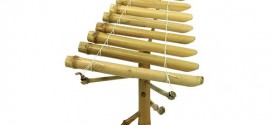
T'rung is one of the popular musical instruments closely associated with the spiritual life of the Bahnar, TSedan, Giarai, Ede and other ethnic minority groups in the Central Highlands of Vietnam.
Read More »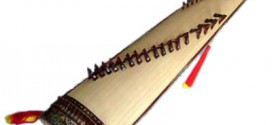
The Tam Thap Luc is a sort of zither with thirty-six brass strings as it is called. It has the shape of an isosceles trapezoid, with a slightly convex sound board made of light, porous, unvarnished wood.
Read More »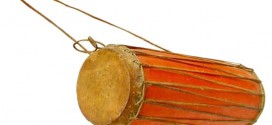
The Trong Com (rice drum) gets its name from the practice of placing a pinch of hot steamed rice in the middle of the drum skin to "tune" the instrument.
Read More »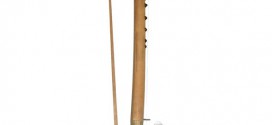
The K'Ni is a stringed musical instrument, sawing bow branch and is popular among many ethnic minority groups living in northern highlands (central Vietnam) such as Bahnar, Gia Rai, E De, Se Dang, Pako, and Hre...
Read More »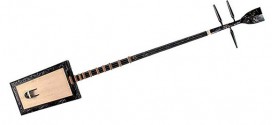
Dan Day is a special instrument of Vietnamese origin. This three-stringed lute is used incorporate the peculiarities of the two-stringed lute (dan Nguyet), the four-stringed pear-shaped lute (dan Ty Ba), and the three-stringed lute (dan Tam).
Read More »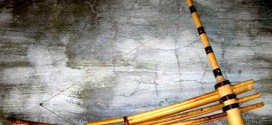
The Pen-pipe is a musical instrument of the wind family with the free vibrated reed, popular among almost all of Vietnam's ethnicity in different forms. The Kinh (Viet) group calls it Khen, while the Mong ethnic minority call it the Kenh, and the Ede in the Central Highlands use a similar instrument called Dinh Nam.
Read More »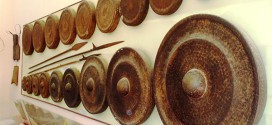
The Cong Chieng is a kind of musical instrument casted from mixed copper and belongs to the idiophonic family. In Vietnamese language, the word "Cong" points to a musical instrument with a bossed part in center (bossed gong) and "Chieng" without it (flat gong).
Read More »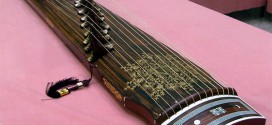
The gong zither is a stringed musical instrument of flipping branch. It is popular among some ethnicity in the North of the Central Highlands.
Read More »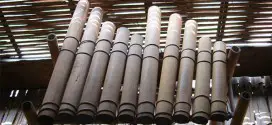
The Klongput is the Xe Dang language name of a musical instrument of the wind family, air driving-in branch.
Read More »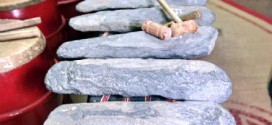
The Dan da (lithophone) is a set of stone slabs of different sizes and shapes fabricated through an elementary technique. Lithophone is composed of a set of eleven resonant stones.
Read More »